Experiences in Santiago do Cacém
Nature and local experiences in Santiago do Cacém


Closest Cities
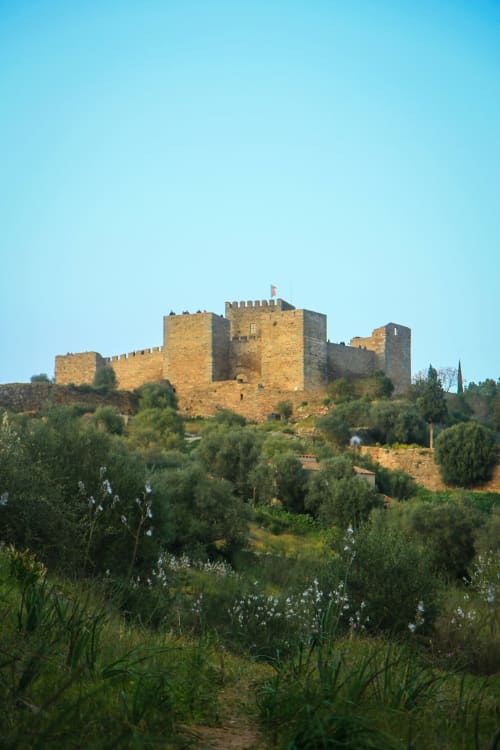
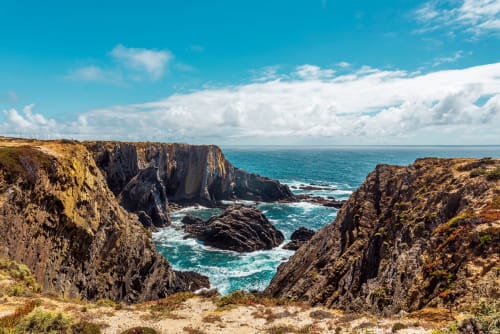
Santiago do Cacém
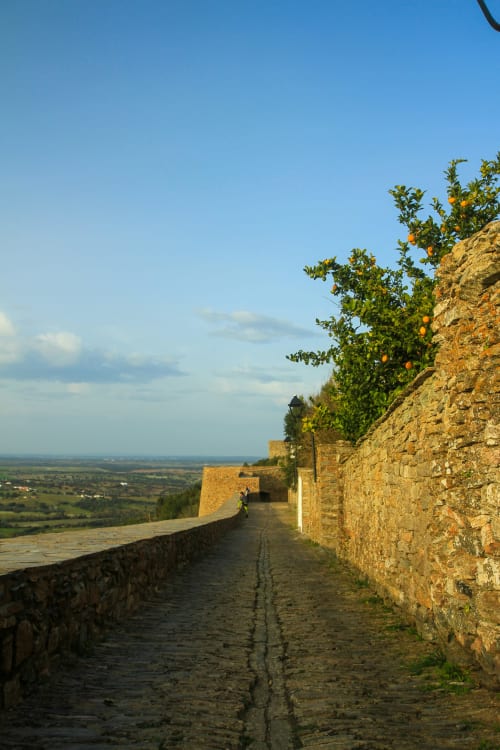
Originally a pre-Celtic settlement, it was romanized until the post-imperial period, specifically from the 1st century BC to the 5th century AD, becoming the main Roman city on the western coast south of the Tagus. Salatia Imperatoria or Mirobriga Celtici (scholars disagree on the name) had a forum with its temple, impressive baths, and (1 km away) the only known Roman hippodrome in Portugal.
Around 712, after the decline of Miróbriga, the Moors reached the area, building the castle on the hill opposite. The Moorish occupation lasted until the 12th century, with many battles fought during the Reconquista until it was definitively returned to Christian possession in 1217. King Afonso II confirmed his father's donation to the Order of the Knights Hospitaller.
Currently, there are 8 parishes, including the historic village of Alvalade, which holds a Manueline charter.
Curiosities
a) The first Rolls Royce to come to Portugal also came to Santiago do Cacém, owned by José Sande Champalimaud; – The first car registration, issued by the Ministry of Public Works in 1904 for Santiago do Cacém, was in the name of Augusto Teixeira de Aragão.
b) Around 15 km from Cerro da Campaniça
The Badoca Safari Park is a theme park covering 90 hectares, inviting nature lovers to spend a day enjoying the beauty of wild life in complete freedom. Located in Alentejo, in Vila Nova de Santo André, between the plains and the sea, just over 1 hour from Lisbon, the park currently houses about 600 animals, representing more than 80 different species. During the safari, you can see and learn more about wild animals in their natural habitat, such as zebras, giraffes, buffaloes, oryxes, and gnus. The park also hosts exotic and raptor birds, primates, lemurs, meerkats, kangaroos, and many more—waiting for you!
The park offers various activities, tours, animal presentations, and dining areas, allowing visitors to enjoy a full day immersed in nature with various animals.
AROUND 15 KM
c) Black Pig Theme Park
Where the fusion of botanicals distilled in traditional copper stills gives life to Europe’s most awarded gin. A controlled and artisanal production, where bottles are manually labeled and bottled.
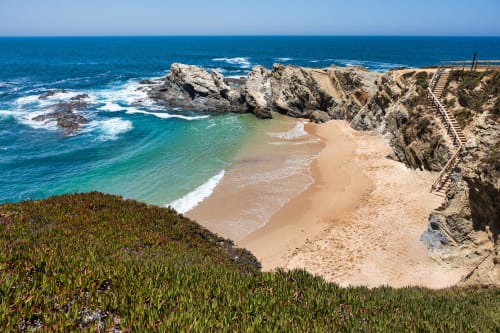
Southwest Alentejo And Vicentina Coast Natural Park
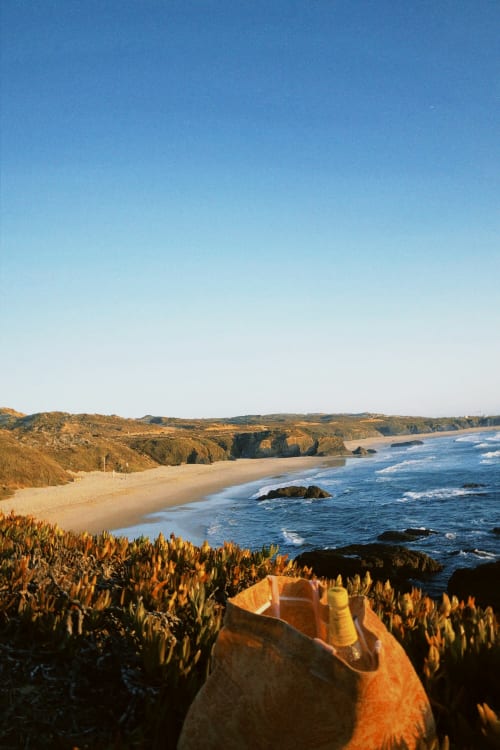
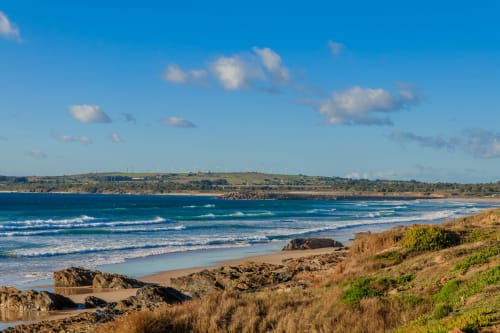
The Southwest Alentejo and Vicentina Coast Natural Park has a Mediterranean climate with strong maritime influence. Summers are mild to hot, with temperatures ranging from 23°C to 29°C, making it the best time of the year to enjoy the beaches. It’s no surprise that many head to the Vicentina Coast to cool off on those scorching hot days for which Alentejo is known. Therefore, June, July, and August are the most popular months.
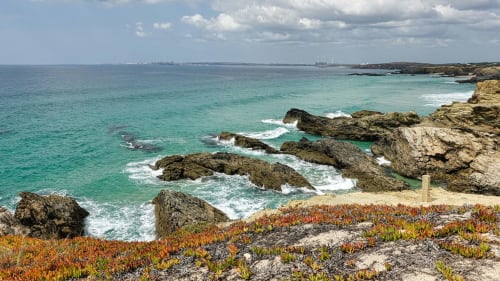
In addition to the beach and the unique sandy cliffs under a giant stone slab that breaks and falls, you can find the towering Nossa Senhora da Queimada Fortress, overlooking the ruined Santo Alberto Fortress on the island of Pessegueiro. The island of Pessegueiro will always remain in our imagination, mystical and “unreachable.”
PORTO COVO
A visit is well worth it for the beautiful steep and hidden beaches found along the coast. During the summer, many visitors come to this area to recharge, finding peace and tranquility lost in time.
Around 250 meters off Porto Covo, you can see the abandoned Pessegueiro Island, a source of inspiration for the more poetic. There, traces of Carthaginian occupation from the 3rd century BC and Roman occupation, including fish salting tanks, were found, but tradition and imagination tell us it was a pirate refuge throughout the centuries.
Today, you can see ruins of a fortress built in the 17th century, which, together with a twin fortress in Porto Covo, defended this part of the coast. The bravest can try to visit the island, but be careful as there are no organized tours.
VILA NOVA MIL FONTES
When visiting Vila Nova de Milfontes, the beaches are a must, as well as a boat trip along the Mira River or, for an off-road adventure, a hike in the hills. Within the village, don’t miss the São Clemente Fortress and its barbican, the main church, and the Chapel of São Sebastião.
This is one of the oldest parishes in the municipality, and perhaps the best-known. Founded by royal decree by King João II in 1486, Vila Nova de Milfontes was once a municipality, later merged with Odemira during the 19th century administrative reforms. The village grew by the mouth of the Mira River, developing from the fluvial-maritime port and serving as a forward post of Odemira for several centuries.
The village had a turbulent history, facing threats from the sea: piracy and corsairs. A recorded episode occurred in 1590 when a powerful corsair attack destroyed the settlement.
In response to the need for security for the village and navigation, the São Clemente Fortress was built between 1599 and 1602 during King Philip II’s reign. Vila Nova de Milfontes is linked to the great achievement of Portuguese aviation, the first air crossing between Portugal and Macau, made by Brito Paes and Sarmento Beires. On April 7, 1924, the pilots left the Campo dos Coitos, near Milfontes, heading East. A monument was erected in Praça da Barbacã, near the fortress, in tribute to the aviators and their historic feat. Note that Commander Brito Paes was from the region, specifically from Colos.
The beaches here are known for their vast stretches of sand, unlike the beaches of other parishes, which are hidden between cliffs. Highlights include the beaches of Aivados (the northern limit of the Odemira municipality), Malhão, and near the village, the Farol, Franquia, and Furnas beaches.
CABO SARDÃO
In the bay of the cape, a pair of peregrine falcons has lived for generations in the area. With time and attention, you might catch a glimpse of their fast flights, an occasional hunt, or even the feeding of their chicks either in the nest or in flight when they leave the platform where they were born. Some smaller birds of prey, like kestrels, also nest and hunt here.
Among the seabirds visible at Cabo Sardão are seagulls, sea doves, sandpipers, and the two species of cormorants that live in Portugal. The cormorant, or crested cormorant, is a breeder here, and some nests can be seen throughout this area.
On these cliffs, you may also spot or hear swifts, gray-necked crows, ravens, and many small birds like sparrows, yellow wagtails, finches, and shrikes.
VICENTINA COAST
Southwest with 110 km of wild coast
This 110 km stretch of wild coast and approximately 75,000 hectares of protected area is part of the Southwest Alentejo and Vicentina Coast Natural Park, consisting of a variety of habitats, some of which are little changed, home to various species of endemic plants and a large number of animal species, especially amphibians, birds, and marine life. This coastline, connecting two particularly beautiful Portuguese regions, combines the romantic and tranquil Alentejo with the truly authentic and wild Algarve coast. Nature, rurality, authenticity, and a mild climate with over 300 days of sunshine per year make this region a must-visit destination for nature tourism enthusiasts.
When to visit
The recommended time to explore Rota Vicentina is between September and June.
The Southwest of Portugal has a very hot summer, with temperatures exceeding 30°C.
Autumn months are generally milder, with pleasant temperatures in the sea and a drastic reduction in wind intensity.
In winter, temperatures do not drop below 11°C during the day, usually being the wettest season of the year.
Starting in March, sunny days alternate with rainy showers, and temperatures begin to rise. The rejuvenated landscape, with its vivid colors and aromas, makes spring one of the best seasons to visit the region!
Rota Vicentina has expanded its offerings to include bike routes with an official network of MTB and gravel trails. Rural and hill paths that can be enjoyed by bike are now complemented with stunning landscapes, seemingly lost villages, and people who feel these trails as part of their heritage. And it is in the Odemira municipality that 38 organized routes start, spread across 5 hubs and 6 access points. Perfect for taking it slow, savoring rural life.